
DuraFlex Chimney Sweep in Steele Creek: A Homeowner’s Guide
Most homeowners who call us asking about DuraFlex don’t actually need it yet. The flue is dirty, or the cap is missing, or the damper sticks, and the liner itself has years of life left. But the ones who do need it and wait are the ones who end up with carbon monoxide risk and a relining bill that runs into the thousands. So before you book anything, it helps to know what DuraFlex actually is, what it isn’t, and how a proper sweep fits into the picture.
If you’d rather have someone look at your chimney than guess from the couch, call (888) 848-8714. Estimates are free.
What Is DuraFlex, Exactly?
DuraFlex is a flexible stainless steel liner system used to reline a chimney flue that’s no longer safe to vent through. It comes as a continuous length of corrugated stainless pipe that drops down the existing chimney chase, connects to your appliance, and gives exhaust gases a clean, sealed path to the outside. It’s not a coating or a patch. It’s a new flue inside your old one.
The word “flexible” is where a lot of confusion starts. A generic flex liner and a DuraFlex liner both bend. That’s about where the similarity ends. DuraFlex is engineered as a system: the liner, the insulation wrap, the top plate, the cap connection, and the appliance adapter are all designed to work together and to hold up to the heat and corrosive byproducts of a wood-burning or gas appliance. Off-brand flex pipe sold as a universal fit often isn’t rated for the same service conditions, and it may not be listed for the appliance you’re venting. In our experience, the shortcut shows up years later, not on the day of installation.
Not all homes need it. A flue in good shape with sound tiles and no cracks vents fine as-is. DuraFlex is a repair for a specific problem, and the only way to know if you have that problem is a proper inspection. We inspect before we recommend. That’s the whole order of operations.
When DuraFlex Is the Right Call (and When It Isn’t)
DuraFlex makes sense when the flue has deteriorated past the point where cleaning or resurfacing will hold. The usual conditions:
- Cracked or spalling clay tiles. The tile liner has broken, chipped, or started to flake. Gases can escape through the gaps into the chimney structure.
- Gaps or missing mortar joints between tiles. Even small offsets let creosote and moisture into places they don’t belong.
- An unlined flue. Older homes sometimes have a bare masonry chase with no tile at all. That’s not a safe venting path for a modern appliance.
- A flue that’s oversized or the wrong shape for the appliance. A liner corrects the flue size so the appliance drafts properly.
- A change in appliance. Swapping to a new insert or a different fuel type can require a listed liner matched to that appliance.
Where DuraFlex is not the answer: when the masonry itself is failing. If the chimney stack is leaning, the crown is crumbling and letting water in, or the bricks around the flue are soft and spalling, a liner dropped into that chase is a liner sitting inside a structure that’s still moving and still leaking. That’s masonry repair first, liner second. HeatShield resurfacing sits in a different spot on the spectrum; it restores a flue that’s roughed up but still structurally sound, without a full reline. Three options, three different problems. The inspection report is what tells you which one you’re looking at.
Why a Full Sweep Has to Happen Before the Liner Goes In
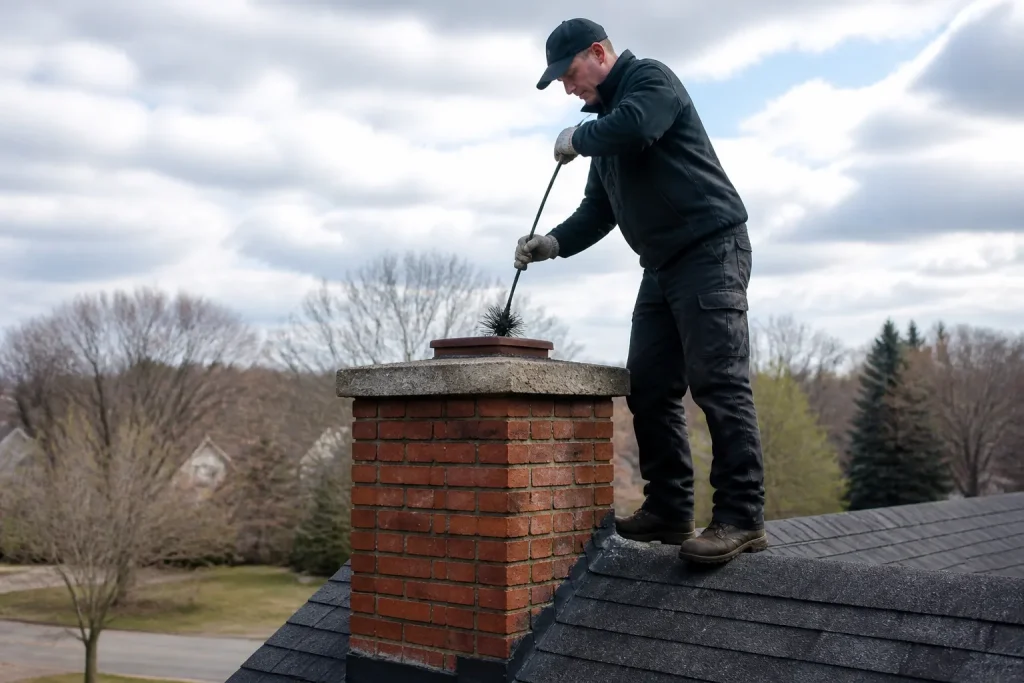
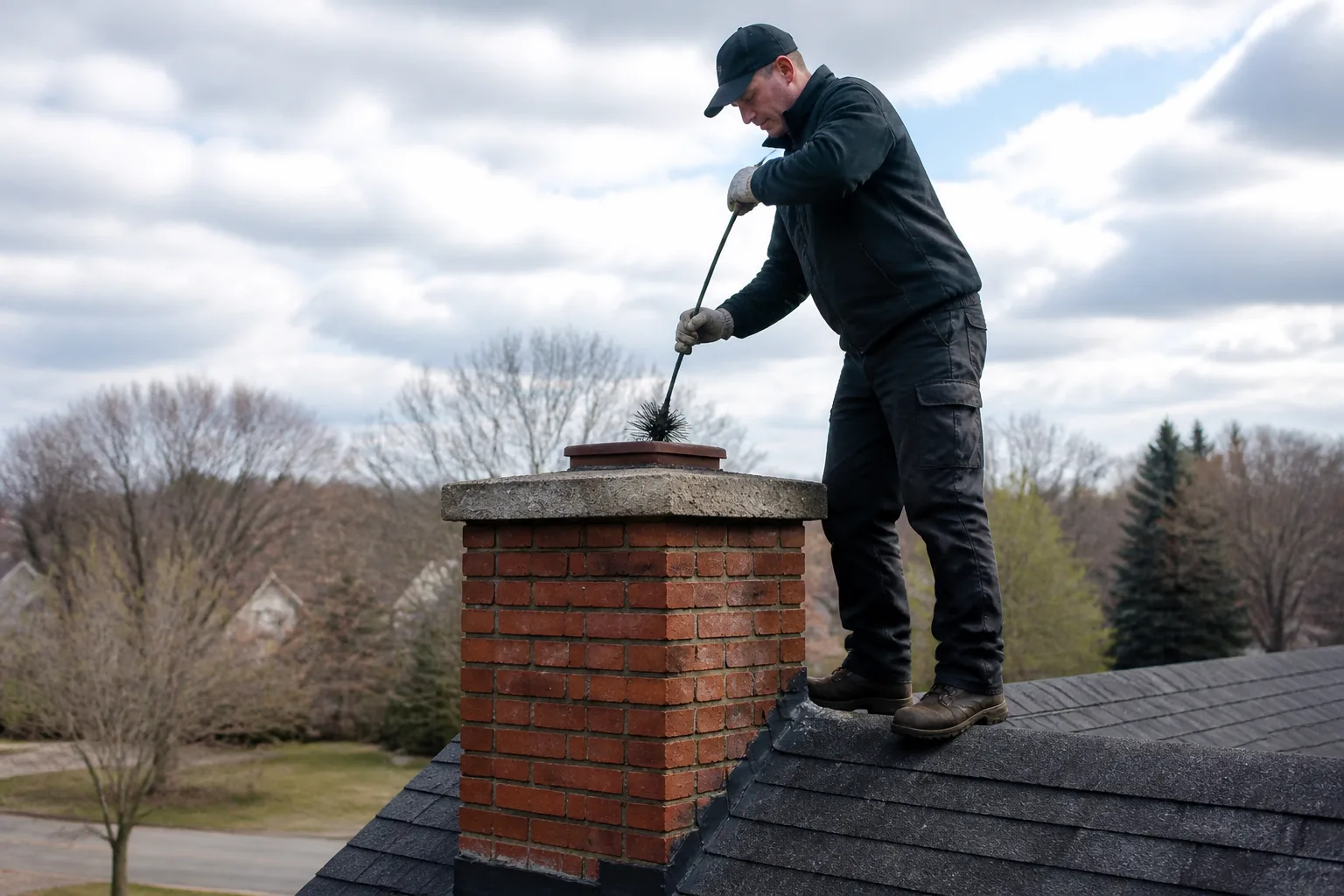
This is the step that gets skipped, and it’s the one that matters most. A liner is only as good as the flue it sits in. Before any DuraFlex installation, the chimney needs a complete sweep: the flue brushed top to bottom, the firebox and smoke chamber cleaned, and any blockages cleared.
Here’s why it’s not optional:
- Debris changes the fit. Soot, creosote flakes, and fallen tile chips sitting on the smoke shelf or lodged in the flue can stop the liner from seating properly or damage the insulation wrap as it goes down.
- Creosote is fuel. A liner installed over heavy creosote deposits traps that material against the new stainless wall. It’s a fire load you’ve now made harder to reach.
- Blockages hide problems. A nest, a collapsed tile, or a buildup can mask a crack or a gap that the inspection needs to see. You can’t assess a flue you can’t see through.
- Draft depends on a clean path. A liner sized for a dirty flue may not perform the way it should once things are clean and the airflow changes.
Any installer who’s prepared to drop a liner without sweeping first is telling you something about how the rest of the job will go. A chimney sweep is the first line of the estimate, not an add-on at the end. In Steele Creek, where a lot of homes burn wood through the cooler months, that pre-install sweep is also the moment you find out whether the flue is dry and sound or holding moisture that needs to be dealt with first.
Reading Your Level 2 Inspection Report
A Level 2 inspection is the one that tells you whether your flue qualifies for a DuraFlex liner or needs masonry work first. It’s a more thorough look than the basic visual check, and it typically involves a camera run down the flue so the technician can actually see the condition of the interior. On the report, here’s what to look for:
- Tile condition, called out per section. Cracks, spalling, and missing pieces should be noted with location, not just a general note that “the flue shows wear.”
- Joint offsets. Gaps or misalignments between tiles, especially near turns in the flue.
- Masonry and crown condition. Evidence of water intrusion, crumbling mortar, or a crown that’s no longer shedding water away from the flue.
- Photos or camera stills. You should be able to see what the technician saw. If the report just says “liner recommended” with no evidence, ask for the images.
- A clear recommendation with reasoning. Liner, resurfacing, or masonry repair, and why that one and not the others.
This is the honest part: if the report shows a sound flue, we’ll tell you so, and a sweep is all you need for now. Nothing gets recommended without camera evidence you can look at yourself. If a report is thin on detail, ask questions before you approve anything. A reputable inspection stands up to scrutiny.
What a Legitimate DuraFlex Installation Looks Like
Knowing the process helps you tell a professional job from a rushed one. Start to finish, a DuraFlex install generally runs like this:
- Full sweep and Level 2 inspection. Clean flue, full assessment, written report with images.
- Measure and size the liner. The liner is matched to the appliance and the flue’s dimensions, not cut to whatever’s on hand.
- Prep the chase. Any blockages cleared, the smoke chamber and damper area checked, and the top of the chimney made ready for the top plate.
- Insulate and drop the liner. The liner goes down with insulation wrap, so it holds heat and performs the way it’s rated to.
- Connect and seal. Top plate secured at the crown, appliance adapter fitted at the bottom, all connections sealed.
- Install or verify the cap. This is where a chimney cap & crown from Gelco or Famco earns its keep; it keeps water, animals, and downdraft out of the flue you just spent money on.
- Test the draft and document the job. A final check that everything vents properly, with photos on file.
Expect a crew that talks you through each stage and doesn’t mind you looking up the flue. A liner that’s installed right is built to last, not patched to pass.
When to Call a Pro
Some chimney work is routine; some of it carries real risk. High-tension components aside, the flue itself is a safety system. If you notice any of these, get it looked at rather than waiting:
- A strong creosote smell in the house, especially on warmer days
- Smoke rolling back into the room when the fireplace is lit
- Visible cracks, crumbling mortar, or leaning at the chimney top
- A carbon monoxide alarm that’s gone off (leave the house and call from outside)
- Water staining on the ceiling near the chimney
- It’s been more than a year since the last sweep
Carbon monoxide is the quiet one. A cracked or gaping flue can let exhaust gases into the home instead of up and out, and there’s no smell to warn you. That’s the reason not to put off an inspection once the flue is suspect. We handle the sweep, the inspection, and the liner work as one job, so you’re not coordinating two contractors. Our technicians have up to 12 years of experience, and we work with DuraFlex, HeatShield, Olympia Chimney, and Copperfield as the material standard for the work we recommend. If the flue is fine, we’ll say so, and if the work can safely wait, we’ll tell you that too. For fireplace issues that turn out to be appliance-side rather than flue-side, fireplace repair covers it.
We answer 24/7. Fast dispatch from 7am to 7pm, Sunday through Friday.
The Bottom Line
DuraFlex is a flexible stainless liner system for a flue that’s structurally sound but no longer safe to vent through. It’s the right call when the tiles are cracked or the flue is unlined, and the wrong call when the masonry itself is failing, because that needs repair first. Before any liner goes in, the chimney gets a full sweep and a Level 2 inspection, and both happen with camera evidence you can review. If you’re in Steele Creek and want to know whether your flue needs a liner or just a good cleaning, we can tell you straight. Chimney Sweep Steele Creek covers the whole system, start to finish, with free estimates. Call (888) 848-8714. We answer 24/7, and dispatch runs from 7am to 7pm, Sunday through Friday.
Frequently Asked Questions
There’s no single price, because the cost depends on the liner length, the appliance it’s matched to, insulation, and any masonry prep the flue needs first. The written estimate sets the final price, and we walk you through the line items before you approve anything. Call (888) 848-8714 for a free estimate.
A Level 2 inspection answers that, and the report should show camera images of the flue so you can see the condition yourself. If the tiles are sound and the flue is clean, you may just need a sweep. Nothing gets recommended without evidence you can look at. Call (888) 848-8714 to book an inspection.
A properly sized, insulated, and installed liner is built to last for many years under normal use. Its lifespan depends on fuel type, how hard the appliance is run, and whether the chimney is kept dry and swept on schedule. Keeping water out with a cap and crown makes a real difference. Call (888) 848-8714 if you’re unsure of your liner’s age or condition.
Creosote and debris get trapped against the new liner, the fit can be compromised, and problems in the flue stay hidden. It raises fire and carbon monoxide risk and shortens the life of the liner. The sweep comes first, every time. Call (888) 848-8714 for a free estimate.
Written by the team at Chimney Sweep Steele Creek.
Need Chimney Cleaning Help?
Call Chimney Sweep Steele Creek - the local pro we connect you with is licensed and insured, with free written estimates in Steele Creek.
(888) 848-8714